Stress does not stay contained inside one person. It spills into daily moments, shared decisions, and emotional exchanges. Over time, that spill can change how partners speak, listen, and respond to each other. This is where stress and relationships begin to intersect in quiet but powerful ways.
Many couples I speak with assume tension means something is broken between them. In reality, pressure from work, finances, health, or family often sits beneath the surface. That pressure shapes moods, patience levels, and emotional availability. Without context, partners may misread each other’s reactions.
What helps most is understanding. Once stress, anxiety, or past trauma gets named, the relationship story shifts. Blame softens. Curiosity grows. Couples counseling often becomes a space where both partners finally feel heard without needing to defend themselves.
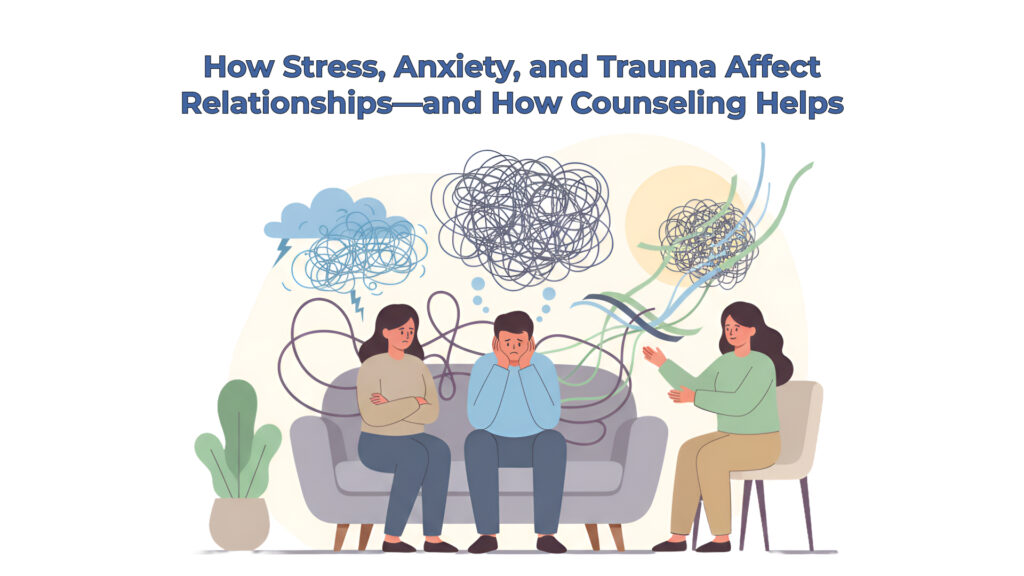
When Personal Struggles Start Affecting the Relationship
At some point, personal strain starts showing up in shared spaces. One partner may feel distant. The other may feel confused or shut out. These reactions rarely come from lack of care. They often connect to mental health and relationships influencing daily behavior.
External pressure and inner struggles affect tone, attention, and emotional energy. Relationship tension does not always signal incompatibility. Many couples face normal challenges while dealing with anxiety, grief, burnout, or unresolved pain. Naming these factors helps normalize the experience instead of judging it.
How Stress Impacts Relationship Dynamics
Stress changes how people show up for each other. Short tempers appear faster. Small issues feel larger than they are. Emotional exhaustion makes patience harder to access, even with good intentions present.
Daily responsibilities add weight. Work demands drain focus. Financial pressure increases fear. Parenting stress reduces rest. Over time, partners may feel less available or misunderstood. Stress and relationships clash when recovery time disappears and communication fades.
How Anxiety Can Strain Communication and Connection
Anxiety often speaks through overthinking. One partner may seek repeated reassurance. Another may pull back to avoid conflict. These reactions can create confusion rather than clarity.
Misreading tone becomes common. Neutral comments may feel critical. Silence may feel rejecting. Anxiety in relationships often drives conflict cycles that repeat without resolution. What looks like disagreement usually reflects fear beneath the surface.
How Trauma Shows Up in Relationships
Trauma does not stay in the past. It influences present reactions, especially during emotional moments. Many couples struggle because trauma responses feel personal even when they are not intentional.
Emotional Triggers and Reactivity
Past experiences shape present responses. A raised voice may activate fear. A sudden withdrawal may trigger anger. These reactions connect to fight, flight, or freeze responses learned earlier in life.
When triggers activate, the body reacts before logic steps in. Partners may say things they do not mean or shut down without explanation. Understanding this pattern reduces shame and opens room for repair.
Difficulty Trusting or Feeling Safe
Some partners stay alert for danger even during calm moments. Hypervigilance affects trust and emotional closeness. Fear of abandonment or closeness may appear as control, distance, or testing behaviors.
These reactions protect the nervous system, not the relationship. Without awareness, partners may interpret them as rejection or lack of commitment, which increases hurt on both sides.
Withdrawal or Emotional Shutdown
Emotional shutdown often looks like disinterest. In truth, it functions as protection. Some people disconnect to avoid feeling overwhelmed or unsafe.
This distance often gets misunderstood. One partner feels abandoned. The other feels pressured. Trauma explained through relationship language helps couples see the intention behind the behavior, not just the impact.
Why These Issues Often Lead to Misunderstanding Between Partners
Misunderstanding grows when experiences remain unspoken. One partner may feel flooded by emotion. The other may feel helpless or rejected. Without context, both sides assume the worst.
Cycles form quickly. Stress fuels reactions. Anxiety drives misinterpretation. Trauma shapes responses. Awareness interrupts these loops and reduces blame before resentment settles in.
How Couples Counseling Helps When Stress, Anxiety, or Trauma Is Present
Couples counseling creates structure when emotions feel unmanageable. It offers a neutral space where both partners can speak without interruption or defense. The focus stays on understanding patterns, not assigning fault.
Creating Emotional Safety for Both Partners
Sessions slow interactions down. Partners learn how to pause, reflect, and respond instead of reacting. Safety grows through clear boundaries and mutual respect.
Feeling emotionally safe allows honesty. Once safety exists, deeper concerns surface without fear of judgment or escalation.
Helping Couples Understand Each Other’s Triggers
Counseling helps identify triggers without blame. Partners begin to see patterns instead of personal attacks. This insight builds empathy and shared responsibility.
When both people understand what activates stress or fear, they respond with care instead of defensiveness.
Improving Communication During Emotional Overload
Counseling supports clear expression of needs. Partners practice saying what they feel without accusation. Listening becomes more intentional.
Empathy replaces frustration when emotions run high. Communication improves even during difficult moments.
Supporting the Relationship While Respecting Individual Healing
Some challenges require individual support alongside couples counseling. Knowing when to add personal therapy strengthens the relationship rather than weakening it.
A coordinated approach respects personal healing while protecting shared connection.
Couples Counseling vs Individual Therapy in These Situations
Couples counseling works best when relationship patterns create distress. Individual therapy becomes essential when personal symptoms overwhelm daily functioning.
Both approaches can work together. One supports the bond. The other supports personal regulation. Balance matters.
Signs Your Relationship Could Benefit From Counseling Support
Patterns repeat despite effort. Emotional distance grows. Conversations feel tense or avoidant. Partners want to support each other but feel stuck.
These signs suggest support could help clarify needs and restore connection.
Healing the Relationship While Supporting Mental Health
Healing begins with compassion. Blame fades when understanding grows. Relationships strengthen when partners view challenges as shared experiences rather than personal failures.
Guided support encourages growth, patience, and mutual care during difficult seasons.
FAQs
Can stress really damage a healthy relationship?
Yes, unmanaged stress can affect communication, patience, and emotional closeness, even in strong partnerships, especially when support systems feel limited.
How does anxiety affect couples differently?
Anxiety may cause reassurance-seeking, avoidance, or misinterpretation, which can strain connection and create repeated misunderstandings.
Does trauma always come from major events?
No, trauma can develop from ongoing emotional experiences, not only extreme events, and it often influences relationship responses.
When should couples consider counseling?
Couples benefit when conflicts repeat, emotional distance grows, or stress and anxiety affect connection and communication.
Can couples counseling help without individual therapy?
Yes, counseling helps many couples, though individual therapy may also support personal healing when symptoms interfere with daily life.
Conclusion
Stress and relationships influence each other more than most people expect. Anxiety and trauma shape reactions, communication, and emotional closeness. Couples counseling helps partners understand these patterns and respond with clarity, care, and shared responsibility.